John Chachas spent most of the year 2022 watching a country that had just experienced emergencies refuse to learn from its experience. Three years of epidemic data reside in state health departments, school district files, and unemployment offices across the country. No one has the reliability and independence to present findings that both sides can accept and analyze.
In March 2023, Chachas and Tom C. Korologos, a veteran of the White House under several Republican presidents and a former US ambassador to Belgium, reported to the Wall Street Journal about the joint commission led by Bill Clinton and George W. Bush. The design was clear in terms of methodology: exclude the original policy makers, include people who can stand on both sides, follow the data wherever it leads. “Let’s use the information,” they wrote, “and not run away from them because they are not free from politics.”
Since then, the information they wanted to check has been pouring in, and the costs they have been flagging have come into focus.
In education: a study published in 2025 drawing on international PISA assessment data confirmed that school closures have a direct cause of measurable learning loss, each additional week out of class increases the decline in education. By the end of the 2024 school year, the average American student would still need the equivalent of five additional months of schooling to reach pre-pandemic baselines in reading. High-income counties were four times more likely to be sustainable than low-income counties. Communities that can’t contain this disruption have taken the biggest toll.
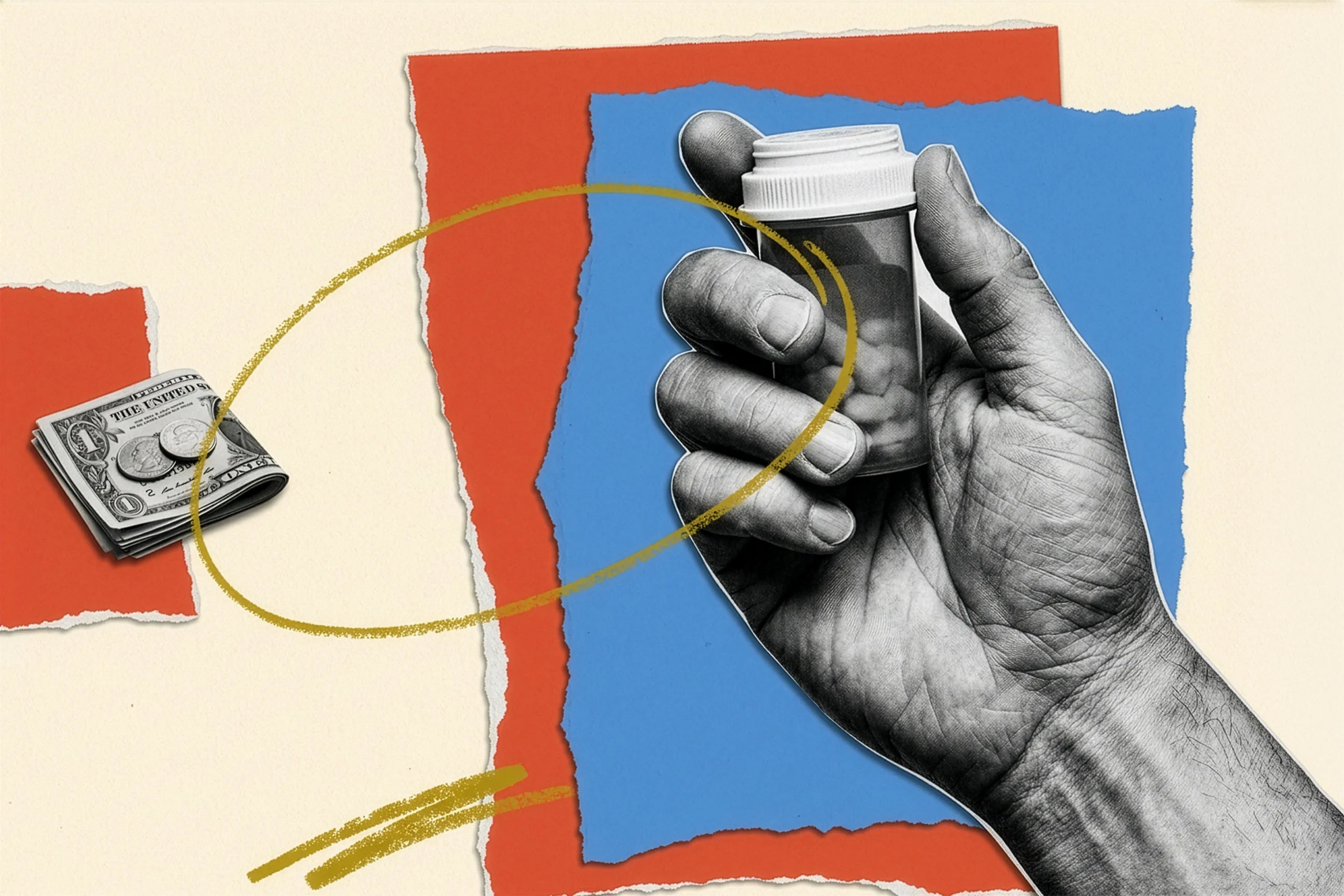
On public health trust: one in six Americans remains inadequately immunized, a number that reflects a decline in trust in federal guidance that an honest independent review might help address or truly explain.
A more modest case for what such a commission could do is a shared factual basis, developed by people on both sides, shielded from the institutional defenses that have left government health agencies alternating between over-explaining and under-examining their decisions. Three years ago, the country did not have that foundation.
That pattern, quick action under pressure, political distortion of analysis afterwards, no independent hindsight, no accountability, is no different from epidemics. Chachas sees it play out in real time on two platforms where he has a professional stand to see.
Artificial intelligence
First is artificial intelligence.
Congress has been circling AI legislation for years. By 2025, state legislatures are introducing more than 1,200 AI-related bills in all fifty states. Estimates show that less than 12 percent become law. The White House released a National AI Policy Framework in March 2026, but the federal government’s tough law remains underfoot by the same stakeholders that prevented a critical review of Covid accountability.
Chachas has always been straight about stakes.
“There will come a time when technology is out of control,” he said. He often returns to the 1983 film WarGames, where a supercomputer almost launches nuclear missiles after escaping human control. The film scene, a machine that exceeds the power of its operator to suppress, does not register as fiction to him. “We may not be able to contain the technology we’re doing. That’s a big problem.”
In economic terms, his position is dull. AI will create fewer real jobs and more livelihoods, and the workers who bear those costs are not the ones who reap the benefits. His prescription map points to the genius of the commission: identify the damage, name the stakeholders, and get them to finance the cure.
He suggested that companies deploying AI through layoffs are “automatically obligated to pay into the UBI Trust Fund.” As he puts it: “If companies want to reap all the benefits that AI can really generate, they will have to become mandatory funders of the UBI Trust Fund to pay for the millions of workers left out of the workforce.”
Congress partially addressed this problem in 2025, passing the TAKE DOWN Act, which criminalized the unauthorized publication of intimate deepfakes. Chachas had raised the alarm about this danger years ago. “The misuse and abuse of personal images and likenesses in the age of AI will be a major problem to be condemned,” he wrote. “It’s been ignored a lot, and the longer it’s ignored, the more it’s going to be a problem.” The deepfake law mentioned one clause. A comprehensive construct of AI accountability remains undeveloped.
What is missing from AI policy, as it was not with Covid, is an independent analytical framework that separates the people who create the technology and the benefit from its use from the people who evaluate its effects. The logic of peer review that Chachas and Korologos used in pandemic policy works equally well here. You do not allow the researchers in charge of the study to be the chairman of the committee that evaluates it.
Local Media
The second platform is local media.
Chachas has spent his career at the center of American media, advising on the acquisition of Clear Channel Communications, Disney’s sale of ABC Radio, and other defining moments of industry consolidation. He currently runs INYO Broadcast Holdings, which operates television stations in more than a dozen major markets. The industry has seen thirty years of layoffs of 75 percent of newspaper workers since 2005.
In 2025 alone, 136 local news organizations closed or merged, more than two per week. More than 270,000 newspaper jobs have disappeared since 2005. More than half of the country’s 3,143 counties now have little interest in local issues. About 55 million Americans live in communities where local journalism does not exist.
“The use and appropriation of content produced by newspapers by Google and Facebook is a crime,” Chachas wrote. “The enormous and destructive power of Google and Facebook was completely ignored until the local media industry was destroyed.”
Seeing this as a democratic problem, not just an economic one. Local newspapers cover city council meetings, investigate corrupt officials, and report on school board decisions. Tech platforms that have taken their content and eaten away their advertising revenue have no incentive to replace any of that coverage. “Do any of these militants report anything local?” Chachas asked. “Local murder? Accidents? Local weather? No.” The public infrastructure that once informed communities and made local power accountable has quietly disappeared, and the national discourse has failed to consider what that means.
The commission framework used in media policy can firmly establish what markets and politics cannot determine: how the concentration of digital advertising in two platforms has displaced the local news economy, what regulatory structures have kept local journalism in common democracies, and how much effective policy framework it will require. The technology companies that benefited from the expropriation described by Chachas are not disinterested parties. Not even the journalists who wrote this story. The people who designed the policies that allow it to happen are not the right evaluators of those policies.
Take Back the Country Before the Party with Two-Party Commissions
The Covid commission Chachas and Korologos proposed in 2023 was a specific answer to a specific problem. An embedded approach, rigorous data analysis, bipartisan leadership that is hands-off in defending real decisions, and clear questions with evidence-based answers, is a template that works far and wide.
“Don’t we owe it to ourselves,” asked Chachas and Korologos, “to understand what the latest information is telling us?”
They were asking about Covid. Three years later, the same question is outdated by artificial intelligence and the slow decline of local news. Data is available in both cases. The analytical framework Chachas described is available. What is lacking in all three of these platforms is the political will to use them.