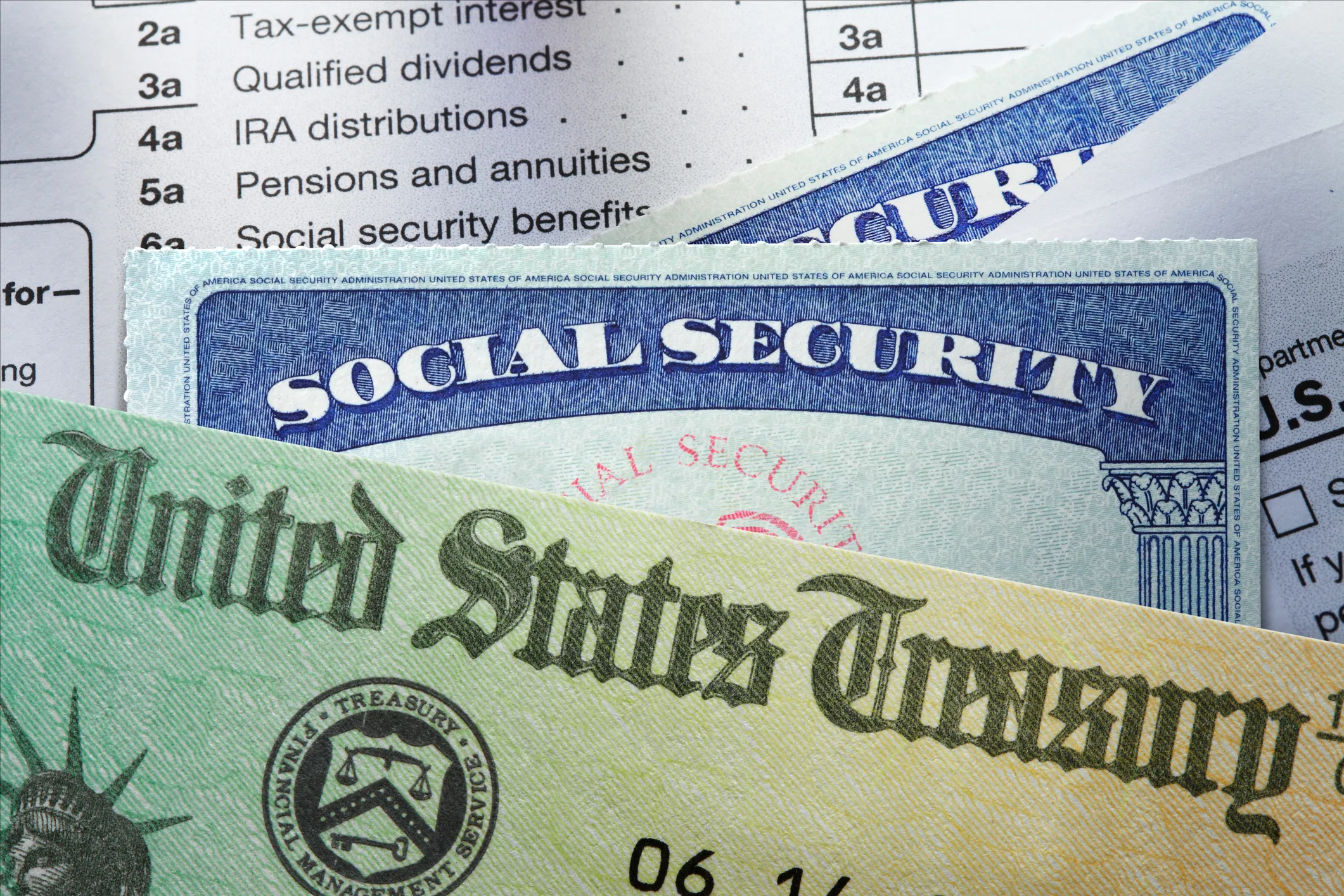
After paying into Social Security for decades, retirees finally get to tap into their benefits at age 62. But those retirees may end up with higher-than-expected tax liabilities on those benefits if they receive income from other sources, including pensions and individual retirement account (IRA) withdrawals.
Social Security is tax-free, and knowing what can result in higher tax rates is an important step in protecting your finances.
Why Social Security taxes are catching retirees off guard
Up to 85% of Social Security benefits can be subject to federal income tax if a retiree’s income exceeds certain limits. Benefits begin to be taxed once your earnings exceed $25,000 for single filers and $32,000 for married filers.
If your income is between $25,000 and $34,000 as a single taxpayer or $32,000 and $44,000 for those married filing jointly, up to 50% of your earnings may be taxed. Once you exceed $34,000 as a single filer and $44,000 as a couple filing jointly, up to 85% of your earnings can be taxed. That doesn’t mean you get an 85% tax rate. It means that 85% of your profit amount is taxable according to your current tax rate.
Retirees who are calculating whether Social Security can cover their living expenses should consider the taxes on their benefits instead of just looking at the face value of the benefits. The figure for determining how much you have to pay in federal taxes on your benefits includes half of your Social Security income.
What counts as income?
Income is not just your salary. Interest from certificates of deposit (CDs), monthly annuity payments and withdrawals from traditional 401(k) or traditional IRA plans count as ordinary income. All of those sources of income can put you in a higher tax bracket and make a higher percentage of your Social Security benefits eligible for tax.
The thresholds for determining what percentage of your earnings are eligible for tax are not adjusted for inflation each year. That means that as costs rise and people have to contribute more money to traditional retirement plans, their taxes on Social Security benefits can increase over time.
What retirees can do before tax season
It is better to know the reality of this situation and prepare accordingly than to be caught off guard. Delaying Social Security benefits and withdrawing from traditional retirement plans can help spread taxes over a longer period of time while increasing your Social Security benefits.
You can also use Roth IRA withdrawals to reduce the tax impact of reaching your nest egg. Qualified withdrawals from Roth plans are not subject to taxes. If you’re still working, converting part of your traditional retirement plans to a Roth plan can spread the tax impact and leave you better prepared for required minimum distributions (RMDs). You should only take RMDs for traditional retirement plans, and they can result in higher tax rates. RMDs generally do not apply to Roth plans.
Retirees should also check state and local taxes, which vary by location. Some states do not collect any income taxes, and some states have lower tax rates for Social Security benefits.