Overview:
Bob O’Connor’s life and 38 years in special education exemplify humble, compassionate teaching based on patience, tenacity, and an unwavering commitment to supporting students with the greatest needs.
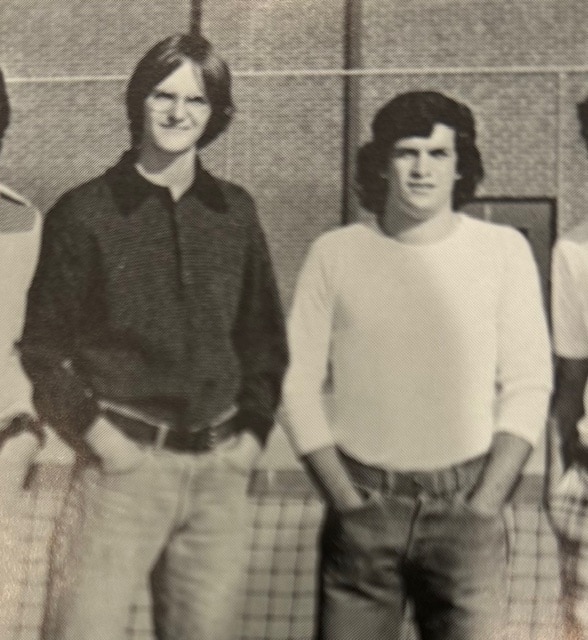
Bob O’Connor and I got together with our 7th grade year at South High (a small neighborhood school that includes 7th at 12th grades) and became fast friends. I immediately fell in love with Bob because of his positive outlook on life, his wry sense of humor, and especially his family values. It was only later that I found out that he was Catholic. I say this because it has happened to me many times – getting close to someone I love and then learning weeks or months later that he is Catholic. I was raised Presbyterian. My Catholic wife calls me a Catholic wannabe.
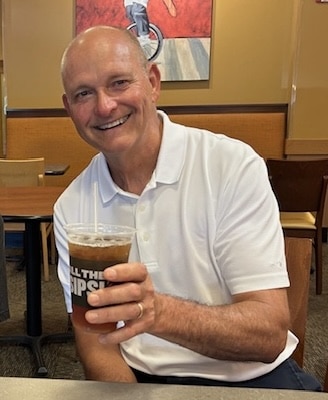
Bob joined Sheila Ray (another dear friend and lifelong teacher to whom I have already paid tribute) and myself on Sunday, July 25, 2025, in Knoxville, at Panera Bread on Kingston Pike. And, yes, her sweet tea drink, which was meant to be bought by me as a symbolic gesture of my gratitude for her teaching work, was also given to me by a Panera Bread employee. Having that opportunity to talk with Sheila and Bob, just the three of us, for three hours is a conversation I will cherish forever. At one point, one of us said we should record the conversation. We remembered important moments in our careers, students and colleagues who inspired us. The emotions were raw and real. There is no way that I or anyone else could capture in writing everything that was expressed during our conversation.
Bob is one of fourteen children. When anyone tells the story of a large family, I wait patiently and pretend to be impressed by numbers of children like eight or ten or twelve. Then I hit them with the story of Bob’s family to take home the prize. The O’Connor family was one of the most respected in South Knoxville. I loved staying with them in their big house on the mountain not far from South High. Sometimes, I would sit down to dinner with Bob’s family, and it would take a few minutes to notice that someone was not a member of the family at the table.
Bob was popular in high school. He was a good student, a good athlete, and had a quiet personality that attracted the attention of many women in our school. However, the qualities that made me want to be his friend are his humility and selflessness. These are two personality traits that serve great teachers well.
Bob and his wife Renee are dear friends of my wife and mine. They raised three sons, all of whom are successful in their fields. The family values that served Bob and Renee’s families during their childhood days served their family very well, too. And, not to toot the Catholic horn too much, there seems to be something about the Catholic people I know that draws me to them.
Bob’s other older sister Jody, whom I met during my dinner trip to the O’Connor home, was a Special Education teacher. I know there are politically correct names in that area of education, but that’s what everyone called it in the 70s. “Hearing Jody talk about the children’s personality and what he did to help them had a big impact on me,” Bob recounted as he sipped his delicious tea.
Bob received his BS in Generalist in Special Education from the University of Tennessee in 1980. He soon found his first position as a Resource Teacher at Norris High School in Anderson County, TN. He then moved to Anderson County High School, where he also became a Resource Teacher. For three years, she worked as a special education teacher in Clinton Junior High’s Comprehensive Development Classroom, a name that might be different in Tennessee schools. Bob had proven himself so deeply involved in working with students with special needs that he went on to work with youth with severe disabilities.
During high school, we Southerners were not exposed to students with special needs for any length of time. Without his sister’s influence, where did Bob get this interest in teaching students with special needs? In my forty-three years of teaching, I have never considered working with children with special needs. The burnout rate among teachers is among the highest of any profession, and that rate is even higher among teachers who work with this population. By the time Bob left Clinton Junior High to take the position of Resource Teacher at Linden Elementary School in Oak Ridge, TN, he had taught for seven years. He received his MS in Special Education from UT in 1988.
After two years at Linden, Bob took a position at Robertsville Middle School in Oak Ridge where he would remain for the next twenty-nine years. All twenty-nine of those years will be as a Resource and Comprehensive Development class teacher. He didn’t burn. He was making strides. After her sister’s inspirational spark, she gained more inspiration over the years from her memories of many wonderful teachers during her high school days. “Nothing specific, really. Just the way they carried themselves, the way they thought. What my students needed more than anything else was someone who cared about them, someone who would be patient with them. I missed the teachers who didn’t give up. I wouldn’t give up on my special needs students.”
What I didn’t know about Bob until he told me that day in Knoxville was that he had found Ed. D. in Curriculum and Instruction from UT in 1991. Did I mention he was humble? Not only did Bob not throw away a number of students who might need great teachers but he also became a doctor of education at the time and became an adjunct professor. In this role, she taught summer and evening classes from 1993 to 2013 for students seeking special education. “I felt it was important to give back to UT in this way, and I’m very happy that I was able to help those college students who were in the same shoes I was in.”
When she retired from teaching in 2018, she had worked with students with special needs, sometimes with severe special needs, for thirty-eight years. That’s probably not a record, but, from my perspective as a teacher of students who didn’t have the kinds of significant special needs that Bob saw every day, I tip my hat to him. I could not have done for my community what Bob did for a few years. There are those of us who hope to make a big difference in the lives of our students, but then there are people like Bob who with little awareness meet the needs of young people who have to overcome every day more than we can imagine.
Bob underestimated the challenge at first. A college education and little supervised classroom training prepares teachers only to a certain extent. Any teacher will tell you that it is different when it is your class, and you alone are responsible for the students’ well-being. Bob was frustrated in his first year and it certainly second-guessed his decision to become a teacher. He credits his amazing, dedicated coworkers with helping him stay there. “Then I had success with a few students. I can’t explain how good that felt, and that kept me motivated. Those successes happened often enough to keep me going.” Bob also coached softball, track and cross-country, which gave him the opportunity to influence students outside of his classroom.
As for who Bob would visit on his Thanksgiving trip, Dr. Jean Schindler was at the top of his list. On that first day at UT’s School of Education in 1975, he asked a fellow student for advice on who he should choose as an advisor. That student told him to break up with Dr. In Bob fashion, he chose Jean as his mentor. He became her major professor and mentor throughout her time at UT and her teaching career until her passing in 2018. “He made all the difference in the world to my life and my career. Yes, he had strong opinions, but he always encouraged me. I am always grateful and I hope I have said thank you enough.”
One of the times he supported Bob was when he almost found himself without a position in education. He left his teaching position to become the principal of a school for students with severe mental health problems who were placed in the legal system. Suddenly, that position was gone. During the difficult time of reapplying for his previous position and hoping that they will take him back, Dr. Schindler was there for support. Fortunately, his former school took him back, and all went well in his career.
Bob has never been one to shy away from a challenge. In her last eight years of teaching when she may have been looking for ways to make her days in the classroom easier, she transitioned into a Developmental Classroom to work with students with behavioral problems. They and their families had no choice in terms of education. He asked his experience of the past thirty years to have a negative impact on their lives outside of school. Understandably, he is particularly proud of that.
While thinking about where education is heading in 2025, he noted that students and the education system seem to be heading in the opposite direction. As expectations become more complex, students seem less equipped to manage that practice. So-called development does not make life easy for young people. Instead, they expose them to too much information and expect them to keep up with technological advances at rates beyond their control. Meanwhile, home and community support appears to be very uneven or completely lacking in some cases. Students today need emotional and intellectual support more than ever as technology continues to permeate every aspect of their education. Bob sees it this way. “We need to take a closer look at each student and make better decisions as teachers about how we affect their lives.” The technology sector is a big problem. It is a powerful tool that needs to be used with greater caution than is currently being used.”
I agree with Bob. I have trusted his kind heart and wisdom for over fifty years. What will bring our youth in the classrooms tomorrow? We hope they will be filled with teachers like Bob, who always leads with love.