Sixteen new START.nano companies develop hard-tech solutions with the help of MIT.nano | MIT News

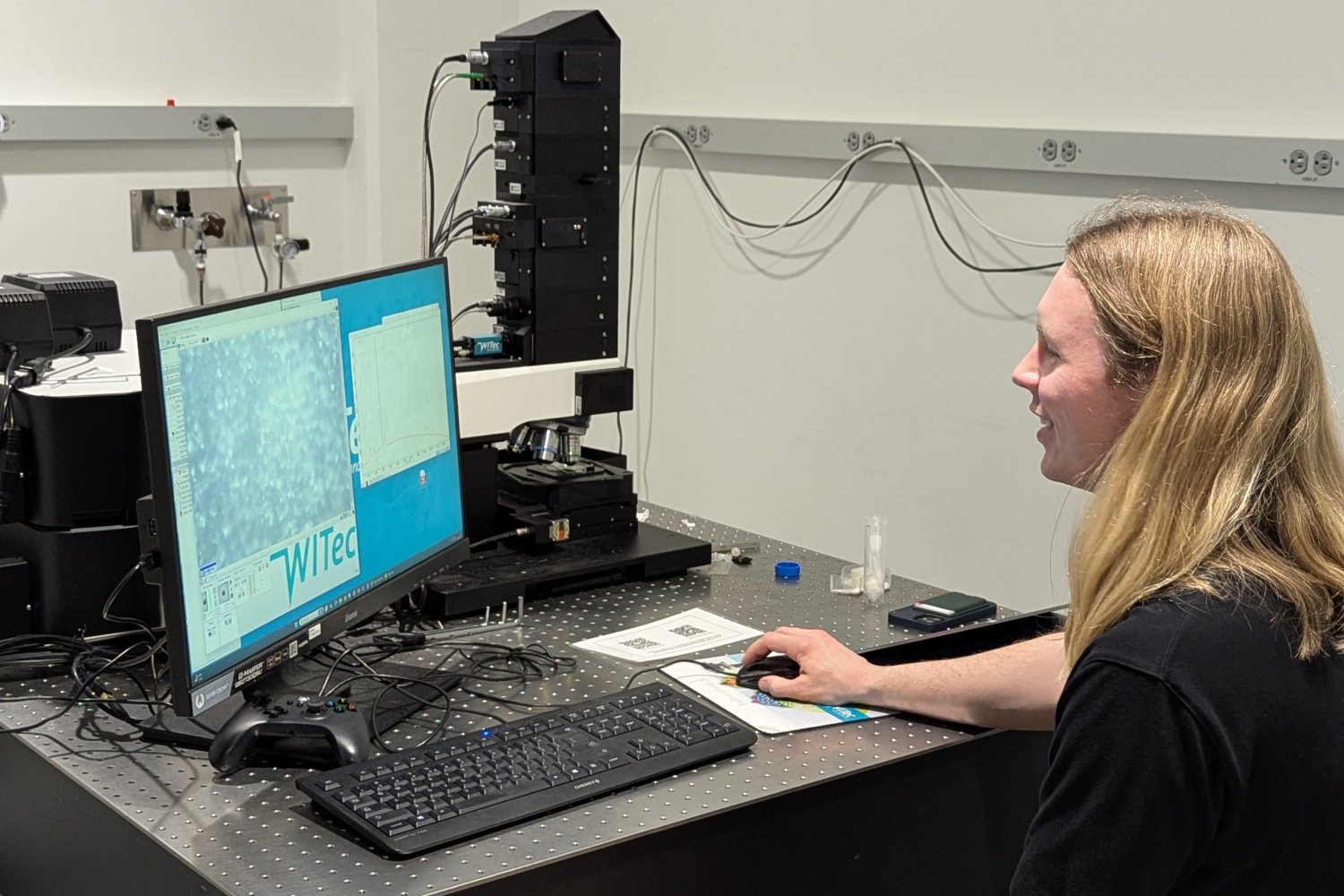
MIT.nano announced that 16 startups became active participants in its START.nano program by 2025, more than doubling the number of new companies from the previous year. Aimed at accelerating the transition of hard-tech innovations to the market, START.nano supports new businesses through discounted use of MIT.nano’s shared resources and targeted access to the MIT innovation ecosystem. The startups are developing solutions for some of the world’s biggest challenges in health, climate, energy, semiconductors, new materials, and quantum computing.
“MIT.nano’s unique resources provide not only basic academic research, but the translation of that research into commercial innovation,” said START.nano Program Manager Joyce Wu SM ’00, PhD ’07. “The START.nano accelerator supports emerging companies from MIT and beyond with the tools and network they need to succeed.”
Launched in 2021, START.nano aims to increase the survival rate of hard-tech startups by facilitating their journey from the lab to the real world. In addition to gaining access to the MIT.nano laboratories, program participants are invited to present at premieres at MIT conferences, and at special events including the recently launched PITCH.nano competition.
“To have a startup working on the frontier of superconductor discovery, the combination of infrastructure and community has been unmatched,” said Jason Gibson, CEO and founder of Quantum Formatics. “START.nano is not just a resource,” added Cynthia Liao MBA ’24, CEO and founder of Vertical Semiconductor. “It’s a great strategy that accelerates our roadmap, allowing us to iterate quickly to meet customer needs and strengthen our competitiveness.”
Although not necessarily affiliated with MIT, five of the 16 companies in the new group are led by MIT alumni, and three more have MIT backgrounds. Overall, 49 percent of the startups on START.nano were founded by MIT graduates.
Here are the intended impacts of the 16 new START.nano companies:
Acorn Genetics develops the “sequencing smartphone,” bringing the power of genetic analysis out of slow, centralized labs and into the hands of consumers for rapid, portable, and affordable sequencing.
Addis Energy uses oil, gas, and geothermal drilling technologies to unlock the chemical potential of iron-rich rocks. By injecting advanced fluids, they use the earth’s natural energy to produce abundant and economical ammonia.
Augmend Health uses virtual reality and AI to deliver clinical data intelligence services for specialty care that turn incomplete documentation into revenue, compliance, and better treatment decisions.
Brightlight Photonics builds an efficient laser infrastructure at the chip scale, combining the Titanium:Sapphire advantage to deliver broadband, high-power, low-noise optical sources for advanced imaging systems.
Cahira Technologies creates a new paradigm of brain-computer symbiosis for the treatment of chronic diseases and human augmentation through autonomous, non-surgical neural implants.
Copernic Catalysts uses computer modeling to develop and commercialize catalysts for the cost-effective and sustainable production of bulk chemicals and e-fuels.
Daqus Energy develops high-capacity lithium-ion batteries using metal-free organic cathodes.
Electric thermal solutions reinvents the firebrick to include industrial heat.
Surveillance make analytical instruments, chemical detectors, and radiation detectors more sensitive, portable, and easier to measure with nanomaterial-based ion detectors.
Mantel Capture designs carbon capture devices to operate at the high temperatures found inside boilers, furnaces, and furnaces – allowing for highly efficient carbon capture that has never been possible before.
nOhm Devices develops high-performance cryogenic electronics for quantum computers and sensors.
Quantum Formatics is accelerating the discovery of the world’s next superconductors using proprietary AI.
Qunett is building the basic hardware stack for quantum networks that can be used to power the next era of global communication.
Rheo develops new ways to make dental care more effective, efficient, and convenient through the use of advanced materials and technology.
Static Semiconductor commercial high-voltage, high-density, highly efficient GaN (gallium nitride) enabling the next accounting period.
VioNano Innovations develops specialty materials solutions that reduce variability and improve precision in semiconductor manufacturing, allowing chipmakers to create smaller, faster, and more cost-effective chips.
START.nano now has more than 32 companies and 11 students – businesses that have gone beyond the prototyping stages, and some are entering commercialization. See the full list here.